



- Position:
- Home
- Tech Know-How
- Seeing the Road Ahead: Rethinking Motion Sensing in Solar Lighting


Seeing the Road Ahead: Rethinking Motion Sensing in Solar Lighting
At night, a road rarely needs to be flooded with light. It needs enough light, in the right place, at the right moment.
For years, motion sensing has been one of the most sensible ways to find that balance in autonomous solar lighting. When a road or pathway is quiet, the lighting can remain restrained. When someone approaches, it responds. The principle is simple, and in many projects it works exactly as intended.
But there is another part of the experience that is easy to overlook.
A driver does not look at the pool of light directly beneath the car. A pedestrian does not walk with attention fixed only on the paving at their feet. We naturally look ahead — toward the next bend, the next crossing, the next part of the route.
That is where the conversation about motion sensing becomes more interesting.
A familiar logic
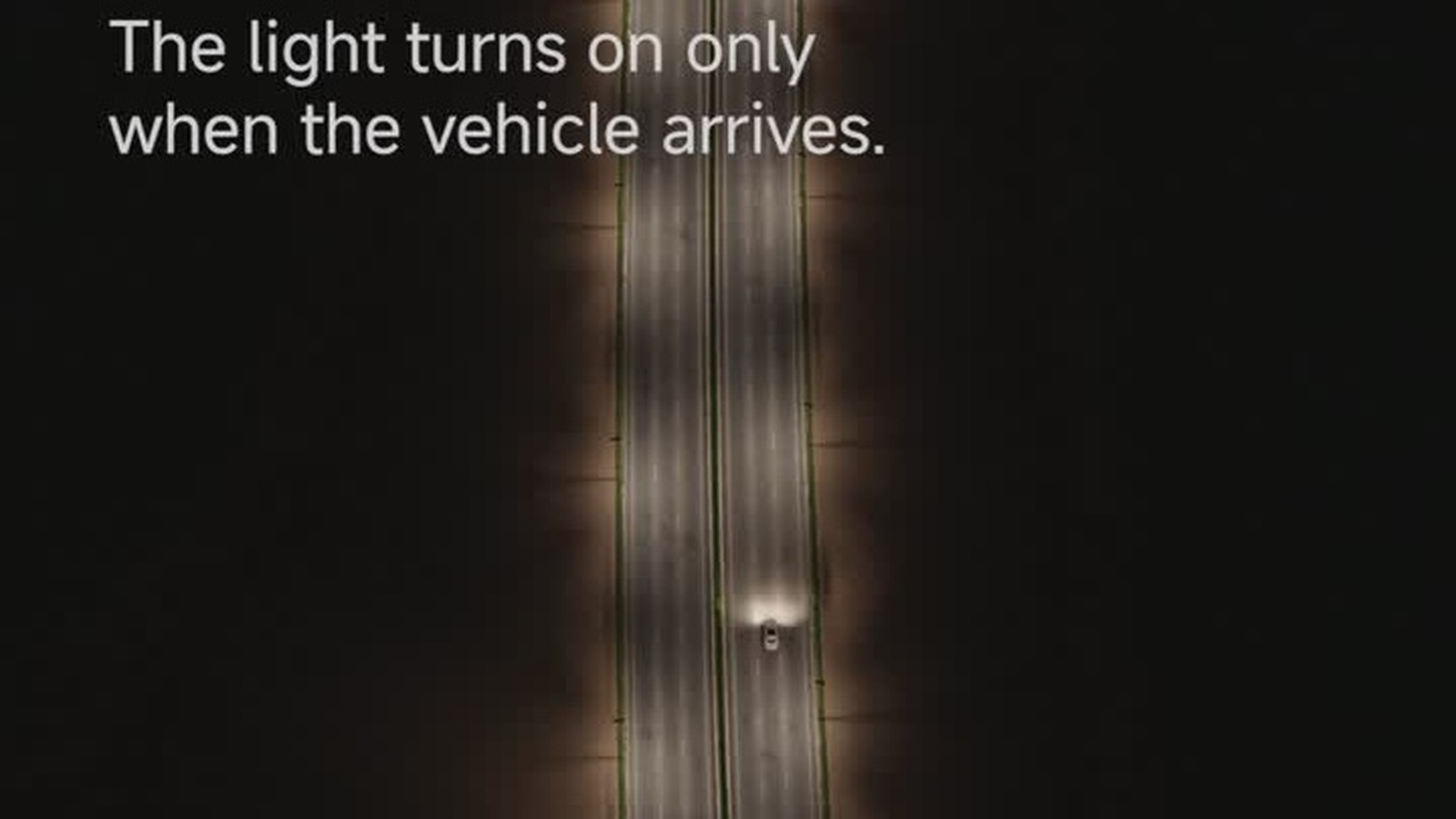
In a conventional standalone arrangement, each luminaire responds to its own sensing area. A person or vehicle enters that area, the light rises, and the next luminaire waits until movement reaches it.
There is nothing inherently wrong with this logic. For many locations, it is efficient, straightforward and entirely appropriate. Yet on a longer road or pathway, its limitation may be felt not in the sensor itself, but in the sequence of the journey.
The light follows movement one point at a time. The space immediately around the user becomes clear, while the route beyond it can remain comparatively quiet until the next sensing zone is reached.
The limitation is not the sensor. It is the response.
The road ahead
Good outdoor lighting is rarely about making every surface equally bright. It is about helping people understand a space: where the route continues, where it turns, where another person may appear, and where the next decision will be made.
This matters on roads, but it is just as relevant on a resort path late at night, a landscaped residential walkway, a campus route, or a park where the surroundings should remain calm without making the journey feel uncertain.
The question, then, is not simply whether a sensor can detect movement. It is whether the lighting response can follow the way people actually experience a route.
From isolated points to a shared response
LightFlow™ starts with the same motion event, but changes what happens next.
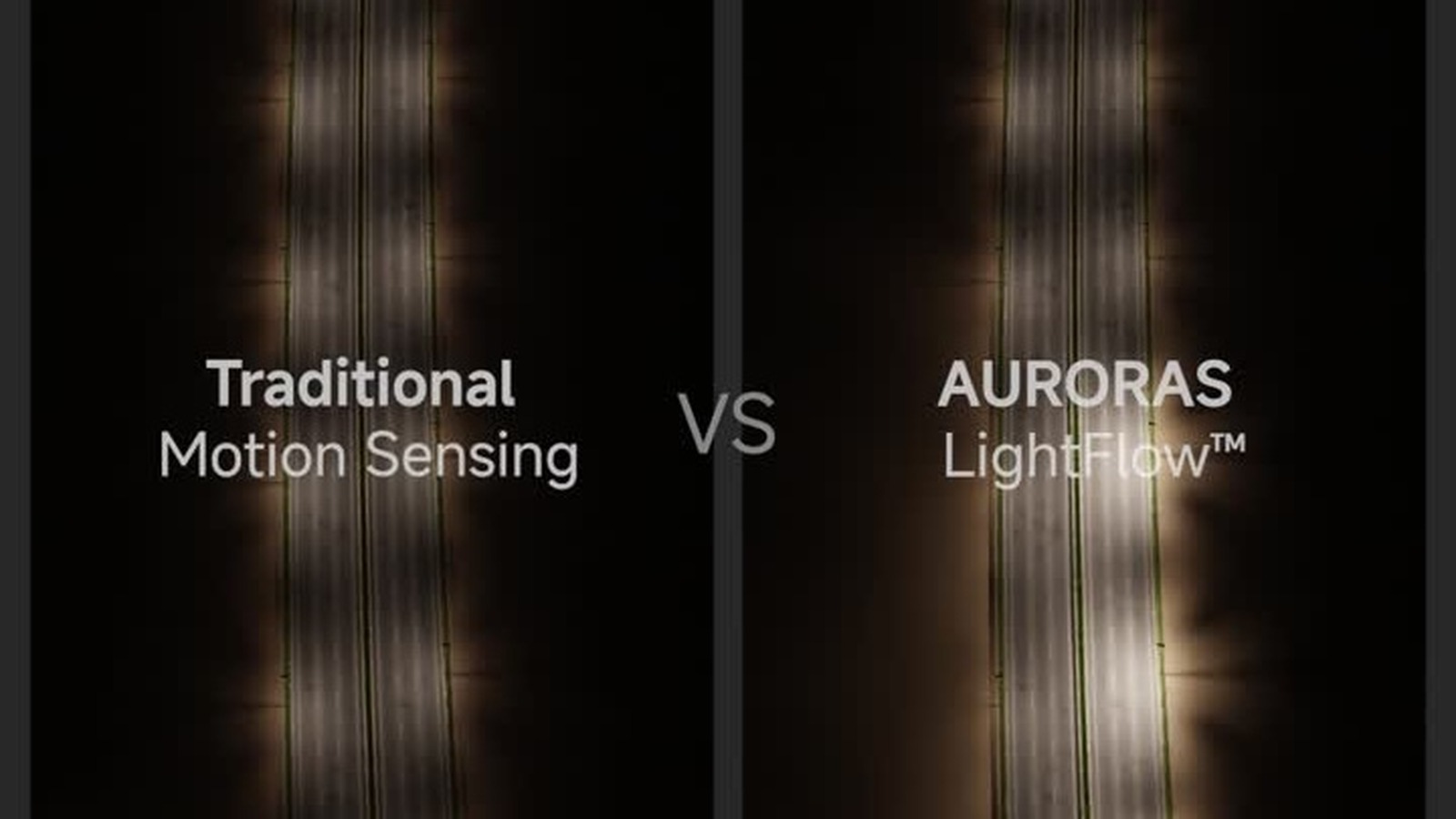
Instead of treating each luminaire as an isolated point, selected luminaires can respond as a linked group. When movement is detected, the lighting response can extend farther along the route rather than waiting for each individual fixture to be reached in turn.
The difference is subtle on paper and immediately clear when seen. One approach allows the light to follow. The other allows it to look ahead.
It is not intelligence for its own sake. It is simply a different relationship between movement and light.
Using light with intention
Solar lighting has always encouraged a certain discipline. The energy available at night has been collected during the day, so good system design is not about keeping everything at maximum output for as long as possible. It is about deciding where light has value, and when.
That is why a more coordinated response does not have to mean indiscriminate brightness. A quiet part of the site can remain quiet. When movement appears, the lighting can respond where the journey requires it.
The principle remains one of restraint: use light deliberately, rather than continuously.
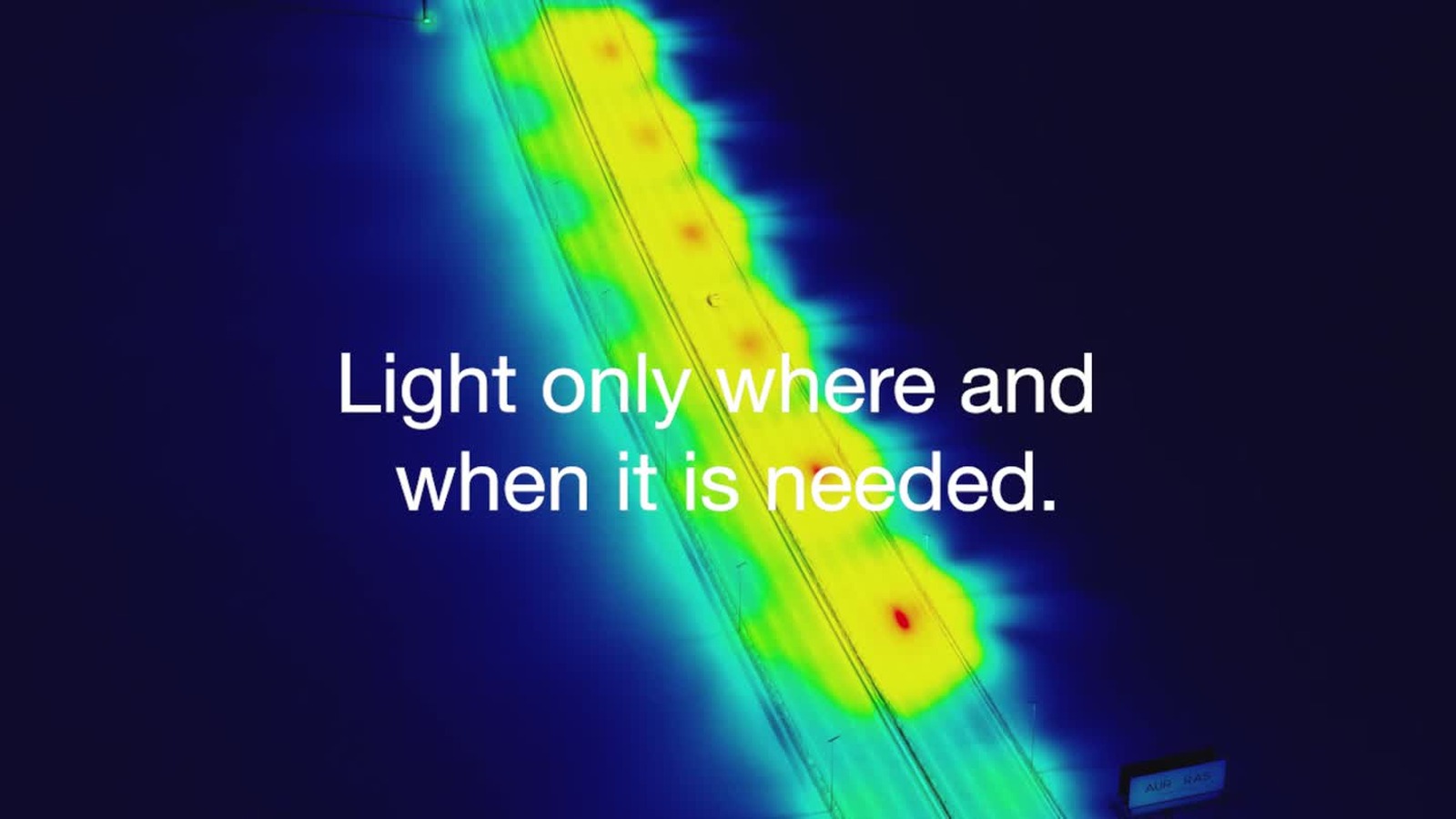
What changes with linked sensing is the shape of that response. Instead of illuminating one isolated point at a time, the system can create a more continuous section of visible route. For the person moving through the space, that small change in logic can make the whole environment feel more considered.
Where linked sensing earns its place
Not every solar lighting project requires linked sensing. Nor should it.
On a simple isolated area, a standalone sensor may be all that is needed. Linked response begins to matter when the experience of moving through the site becomes part of the design brief — on longer pedestrian routes, landscaped roads, resort grounds, residential communities, campuses and other spaces where continuity is important.
In these projects, the conversation moves beyond the performance of a single luminaire. The designer begins to consider the sequence of light across the site: what the user sees first, what becomes visible next, and how much of the surrounding darkness should be preserved.
That is a more useful way to think about smart lighting. Not as a collection of features, but as a way of making the lighting behave more naturally within the place it serves.
A small change in logic
Good lighting often works quietly. It does not ask to be noticed. It simply allows people to understand the space in front of them.
Motion sensing remains a practical and valuable tool in solar lighting. Linked sensing does not discard that idea; it refines it. The sensor still responds to presence. The difference is that the response can become part of a wider lighting sequence rather than a single isolated moment.
Perhaps the next step in smart solar lighting is not brighter light, or more complicated control. Perhaps it is simply better timing, better coordination, and a better understanding of the journey ahead.